

Bicker Review: Jarda Blažek compared 2 smart UPS units with a supercapacitor and a battery

Smart industrial backup power supplies from Bicker protect your production systems and industrial PCs against unexpected power outages, voltage drops, and fluctuations. Jarda Blažek (blaja.cz) investigated the practical differences between UPS units with an integrated supercapacitor and those with a LiFePO4 battery.
Jaroslav Blažek's Review
We will take a look at two types of UPS units—or backup power supplies, as they are commonly known—from the German company Bicker. The primary difference lies in the energy storage system, whether it uses a capacitor or batteries, and in the software for managing the UPS.
The manufacturer supplies several variants of these power supplies with different power ratings and types of backup energy elements. Within the same power series, they all look identical, differing only in the communication interface (RS232, 485). The individual models are distinguished by the number following DP in their model designation. We are interested in the DP2 version with a capacitor (UPSI-2406R2DP2MB) and the DP3 version with a LiFePO4 battery (UPSI-2406R2DP3MB). The dimensions of the UPS are 63 mm in width, 120 mm in height, and 105 mm in depth.
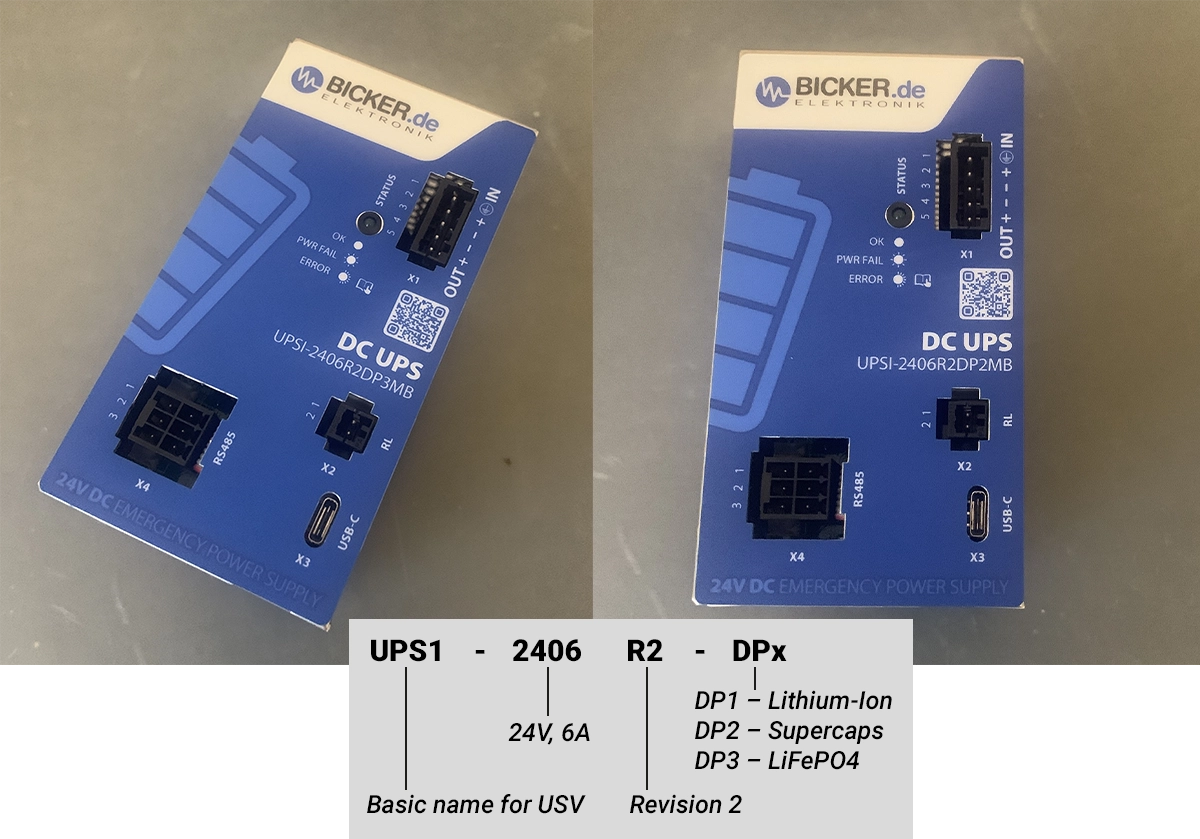
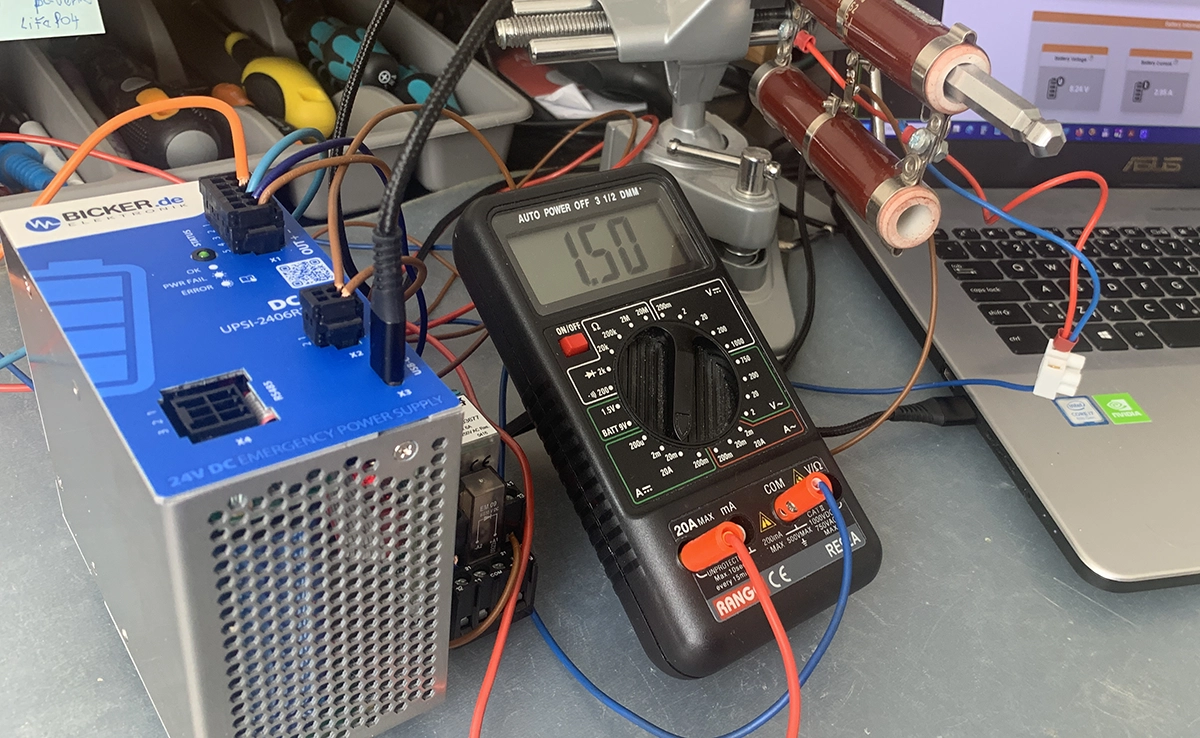
Connection: The setup utilizes a single connector for the input and output 24 VDC voltage, a second smaller relay contact through which our signaling relay is connected, and a USB-C interface for connecting a PC. Additionally, there is one green signaling LED.
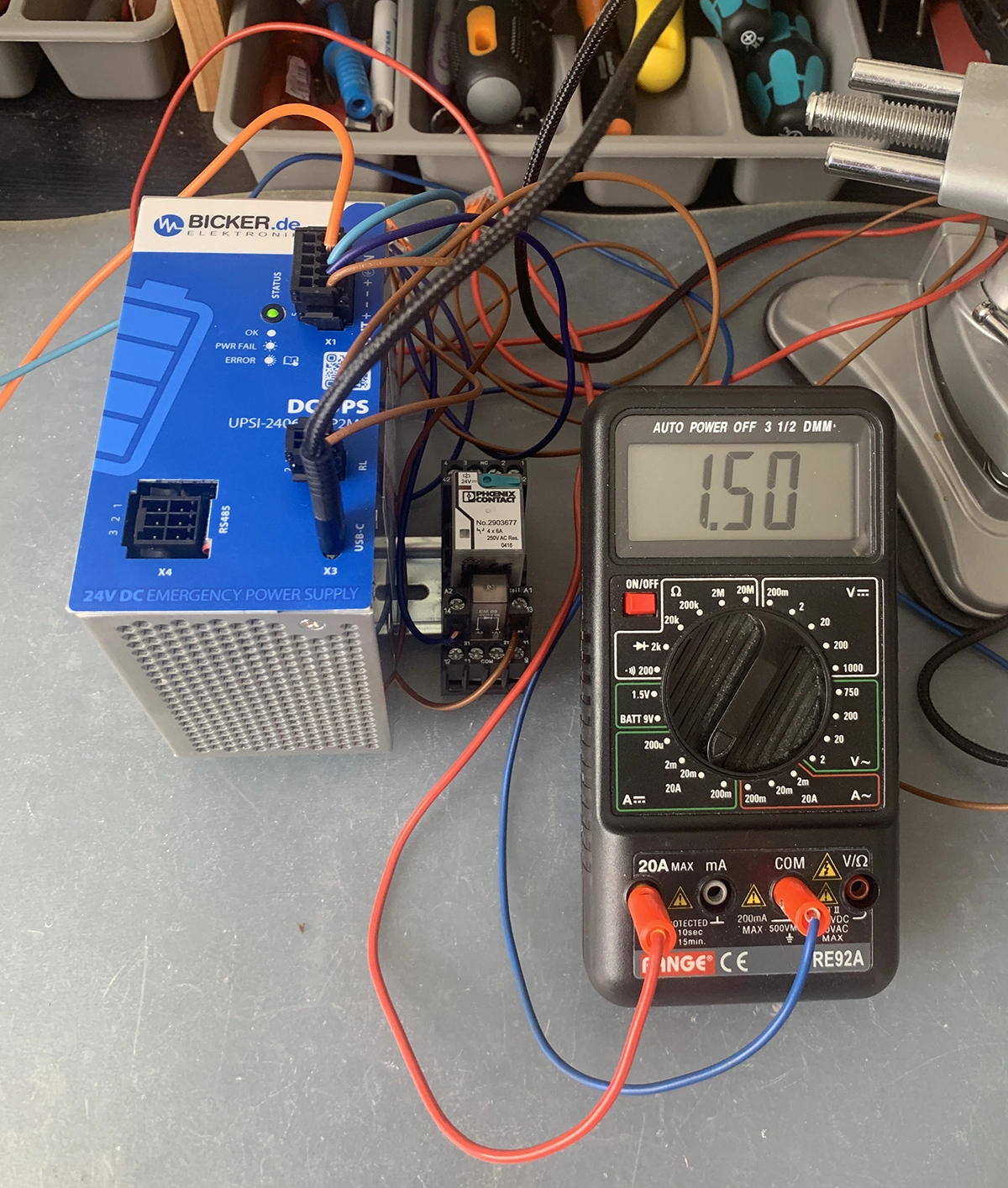
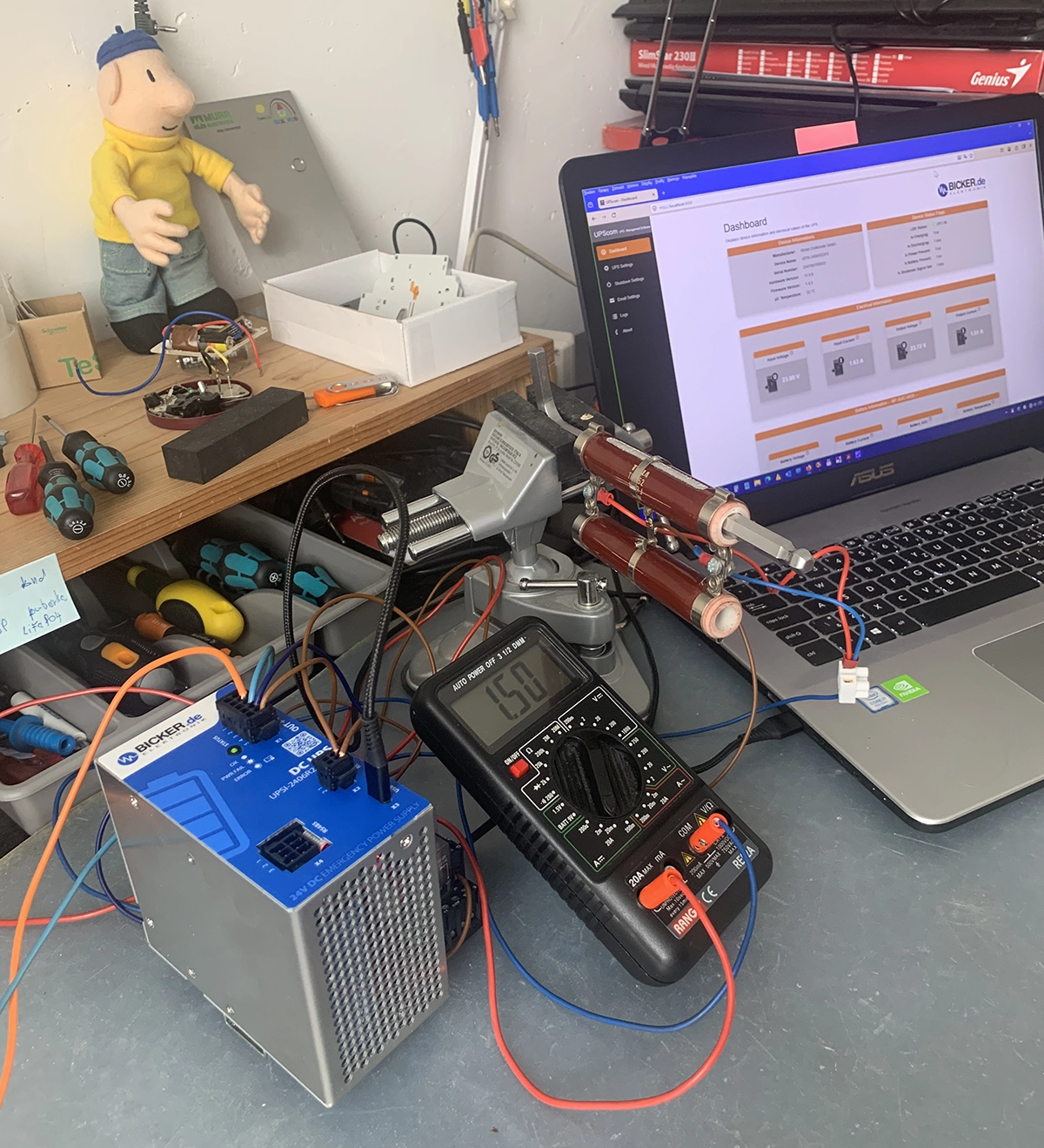
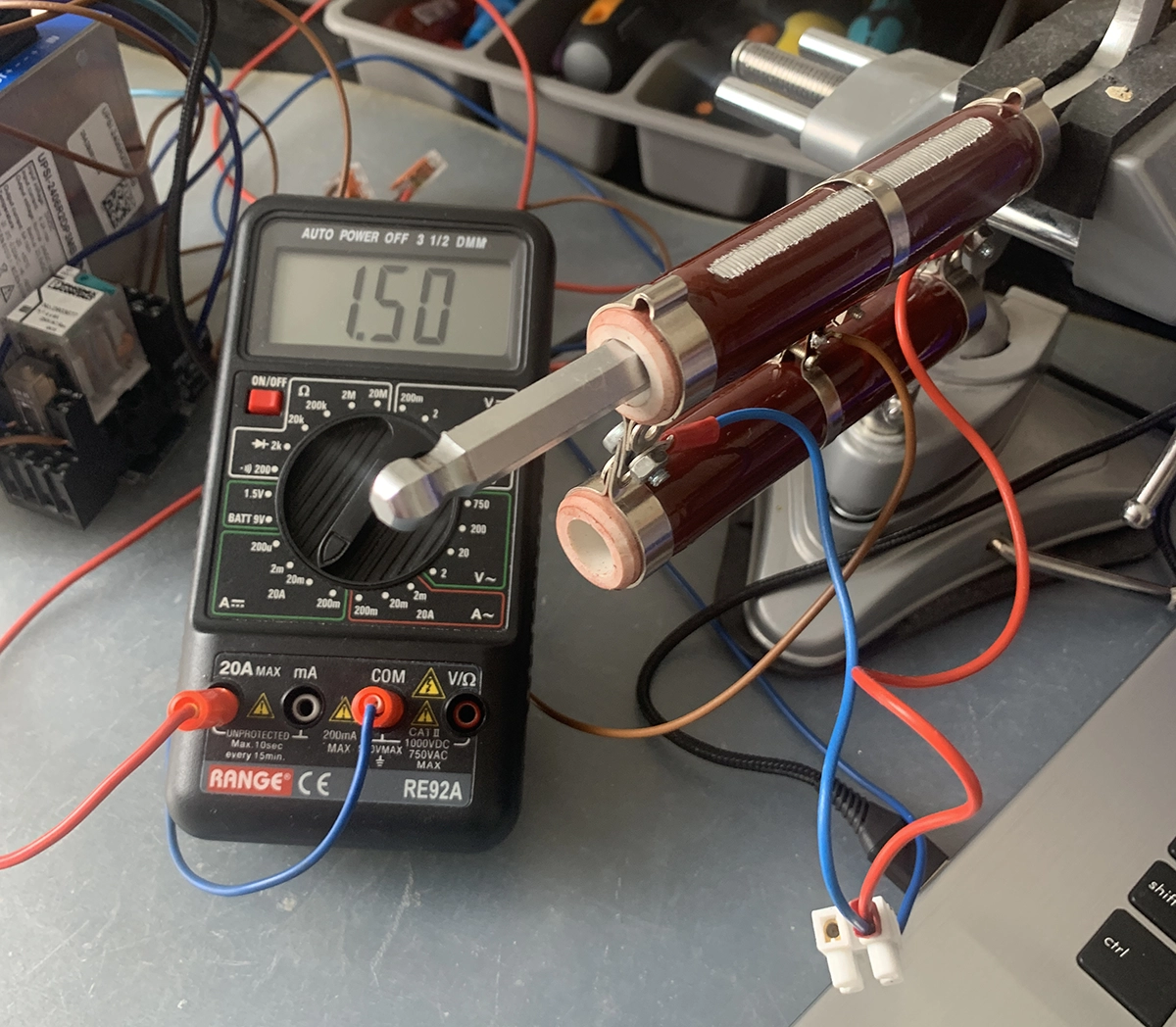
A 1.5 A load using power resistors, which "heat up nicely." 36 W is a fair bit of heat, after all. In practice, the 24 VDC output would power an industrial PC, a PLC, or entire automation circuits.
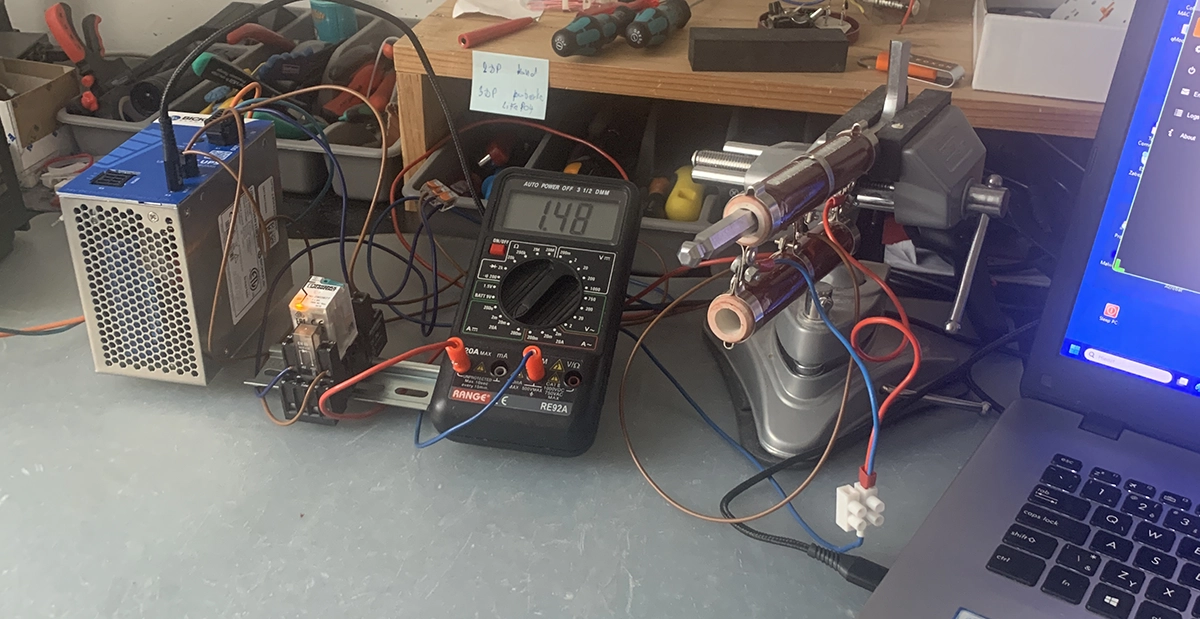
The DP2 in the model name indicates that this is the capacitor-based UPS. The relay signals battery mode, meaning the input voltage to the UPS is disconnected.
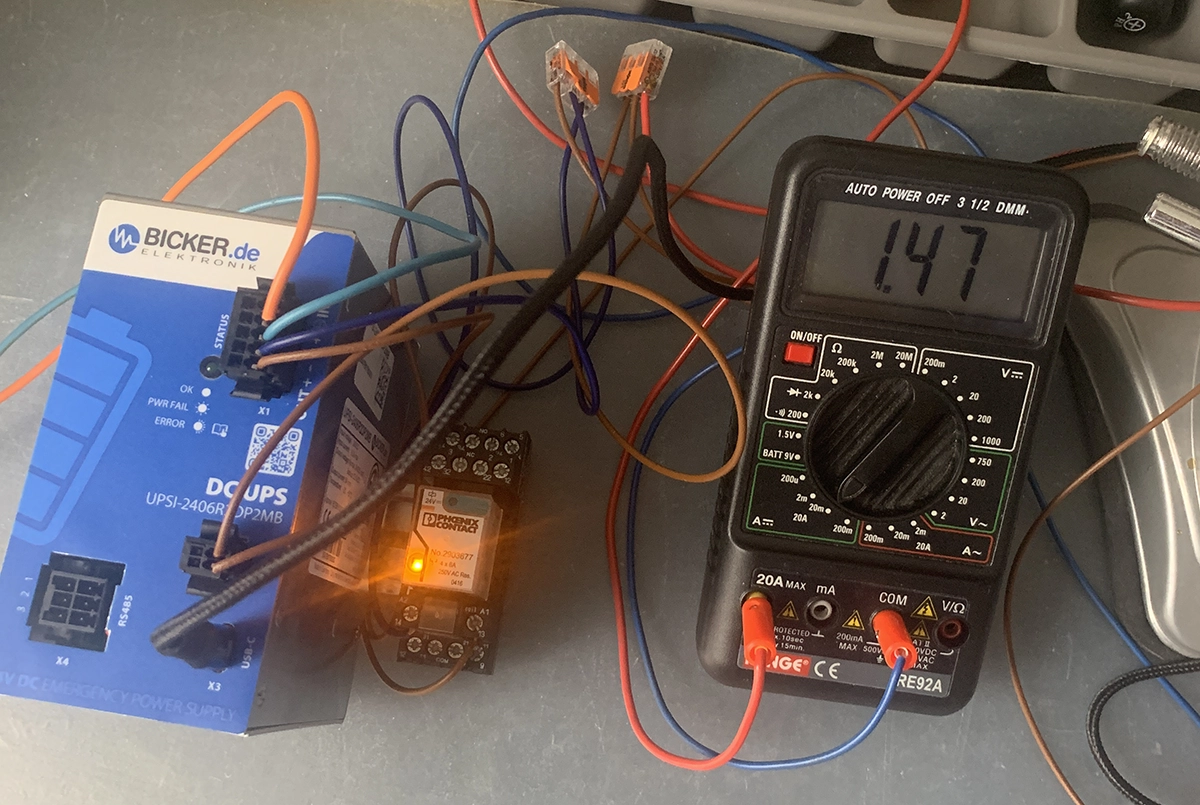
The capacitor-based UPS inherently provides backup power for a much shorter time than the battery model. Because of this, each serves a different purpose:
- The capacitor version acts as reliable protection against brief power interruptions.
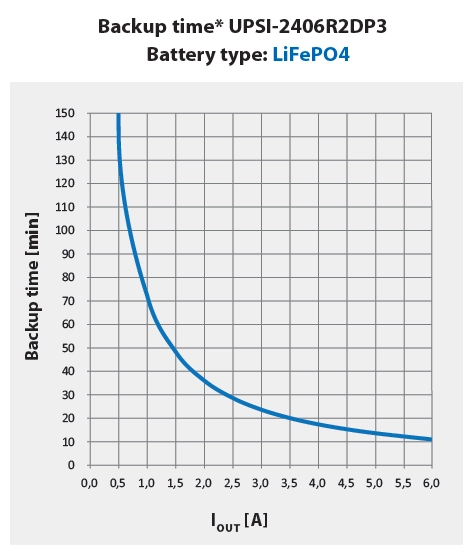
- The battery version is primarily used to protect control PCs, PLCs, communication equipment, and measurement systems from unexpected outages, voltage drops, or fluctuations in the 24 VDC network.
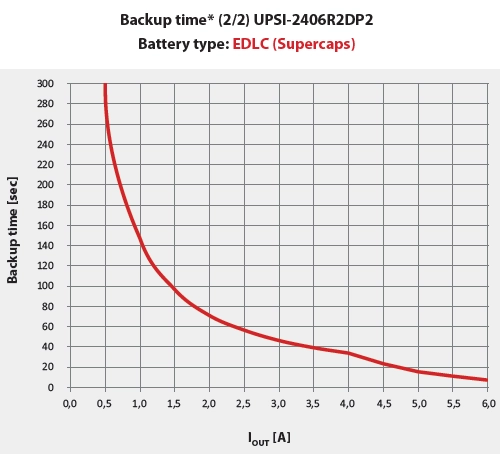
Capacitor version load characteristics
At the applied load, the UPS kept supplying power for just under two minutes, as we will see below. On the other hand, recharging the unit was very fast.
Configuration and Control Software
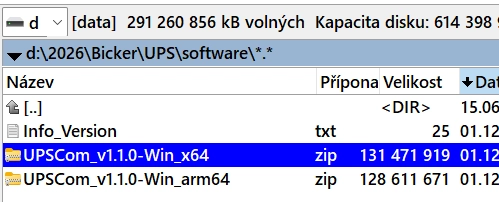
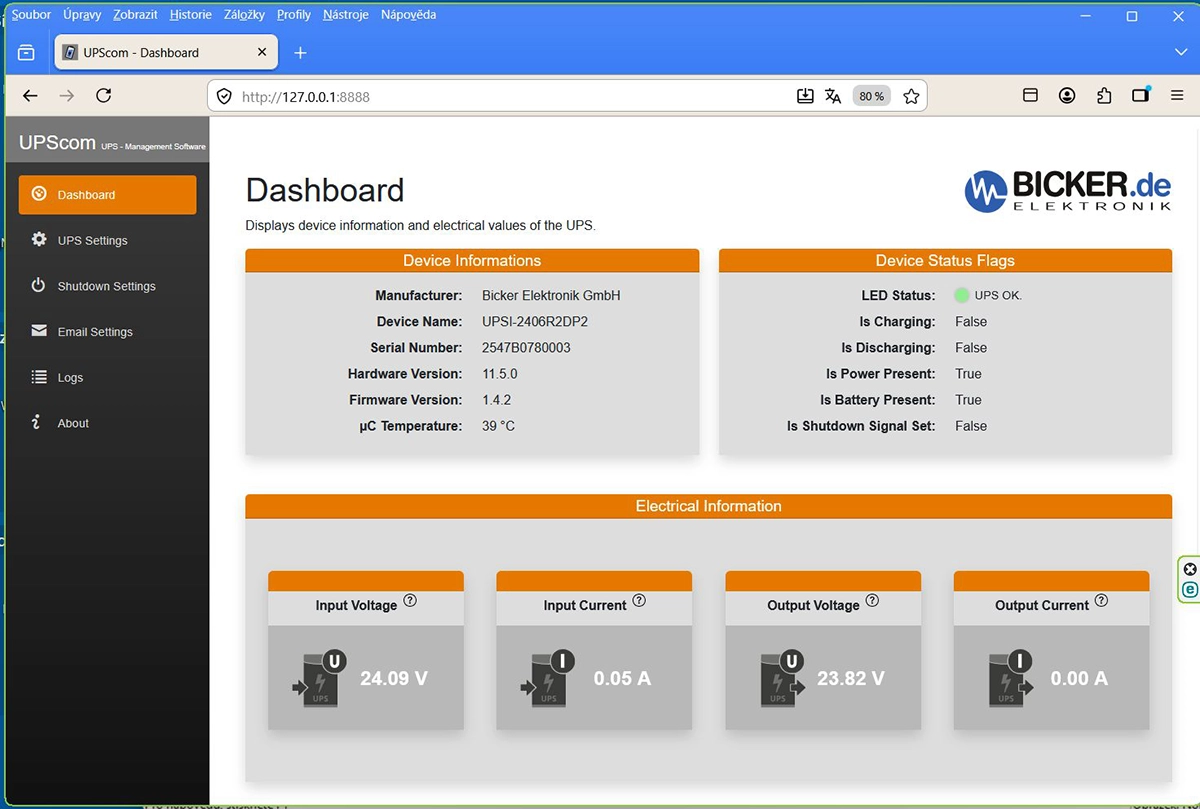
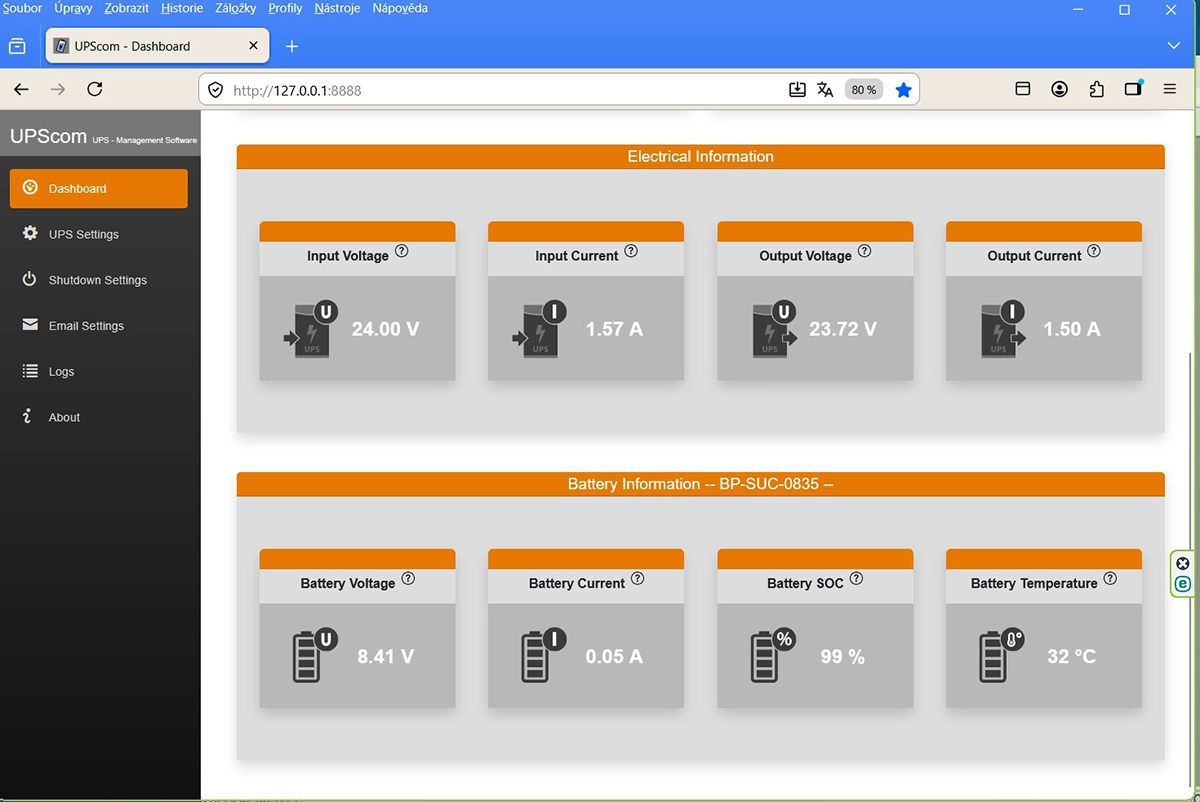
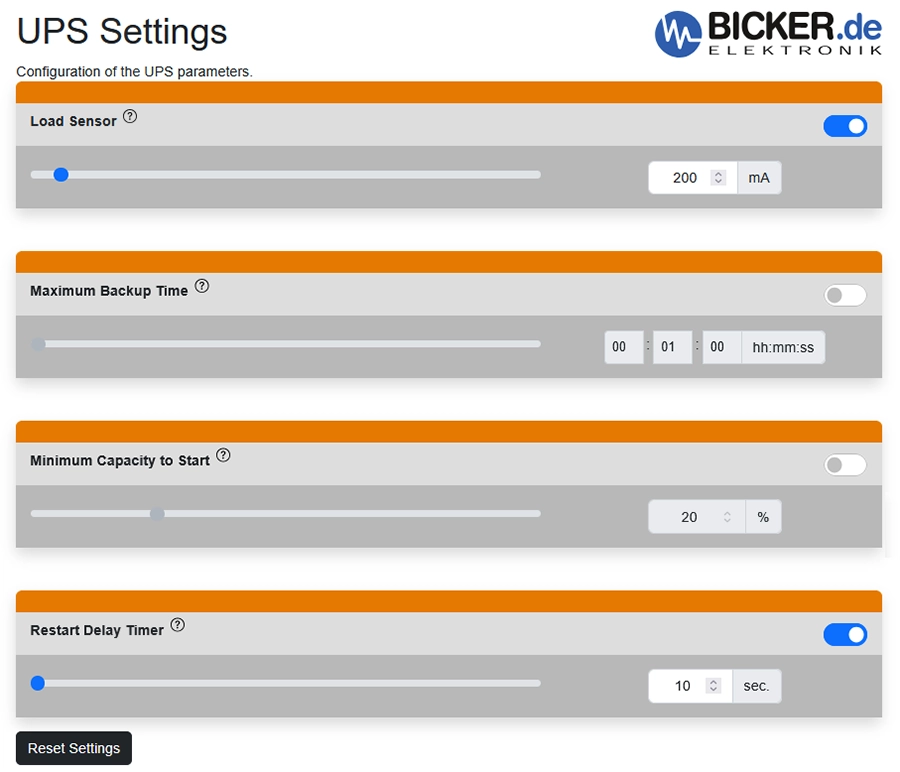
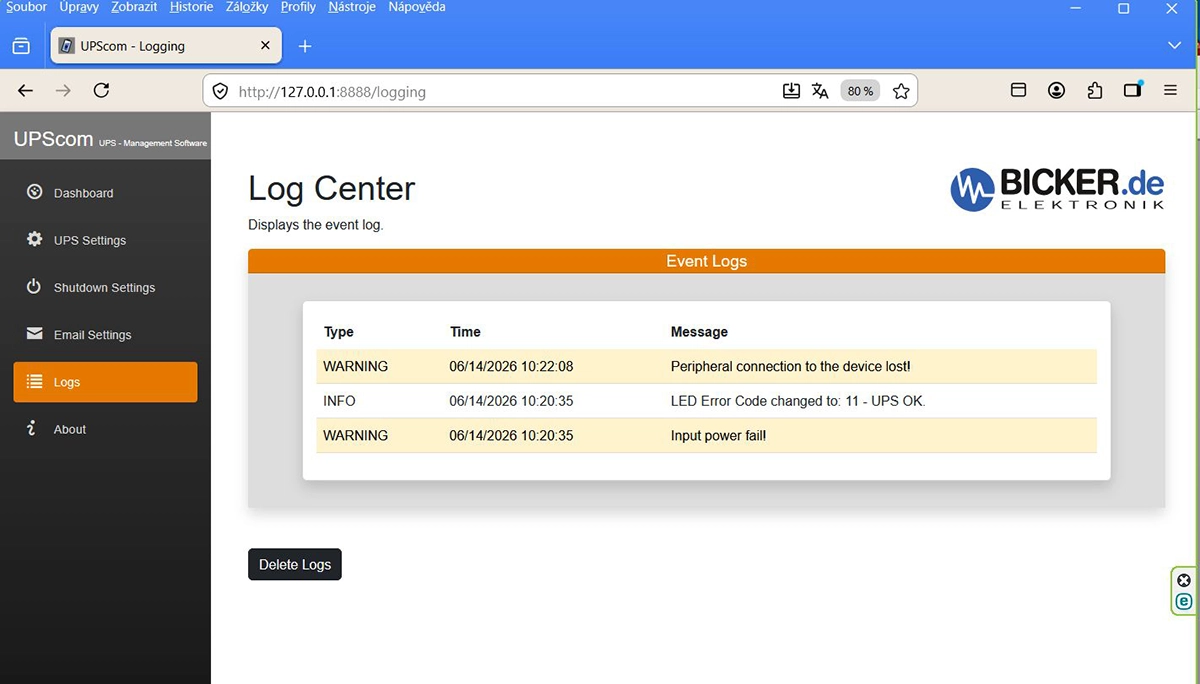
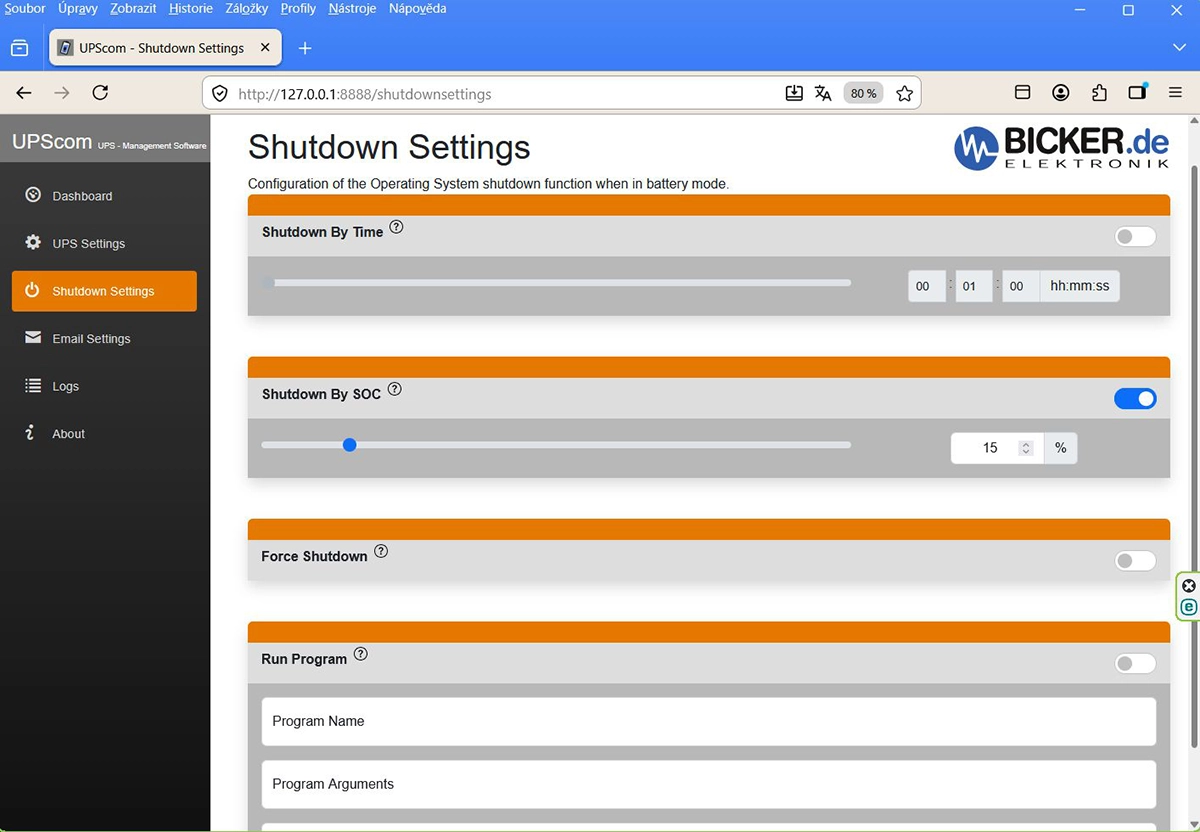
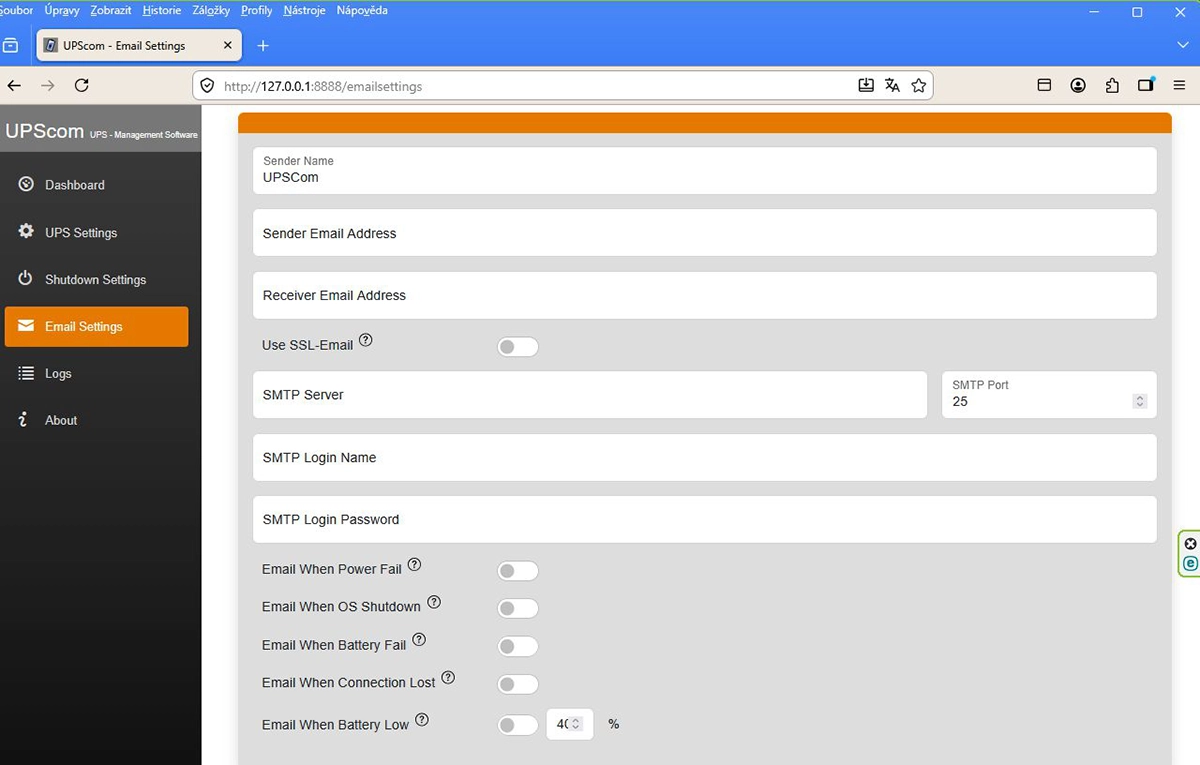
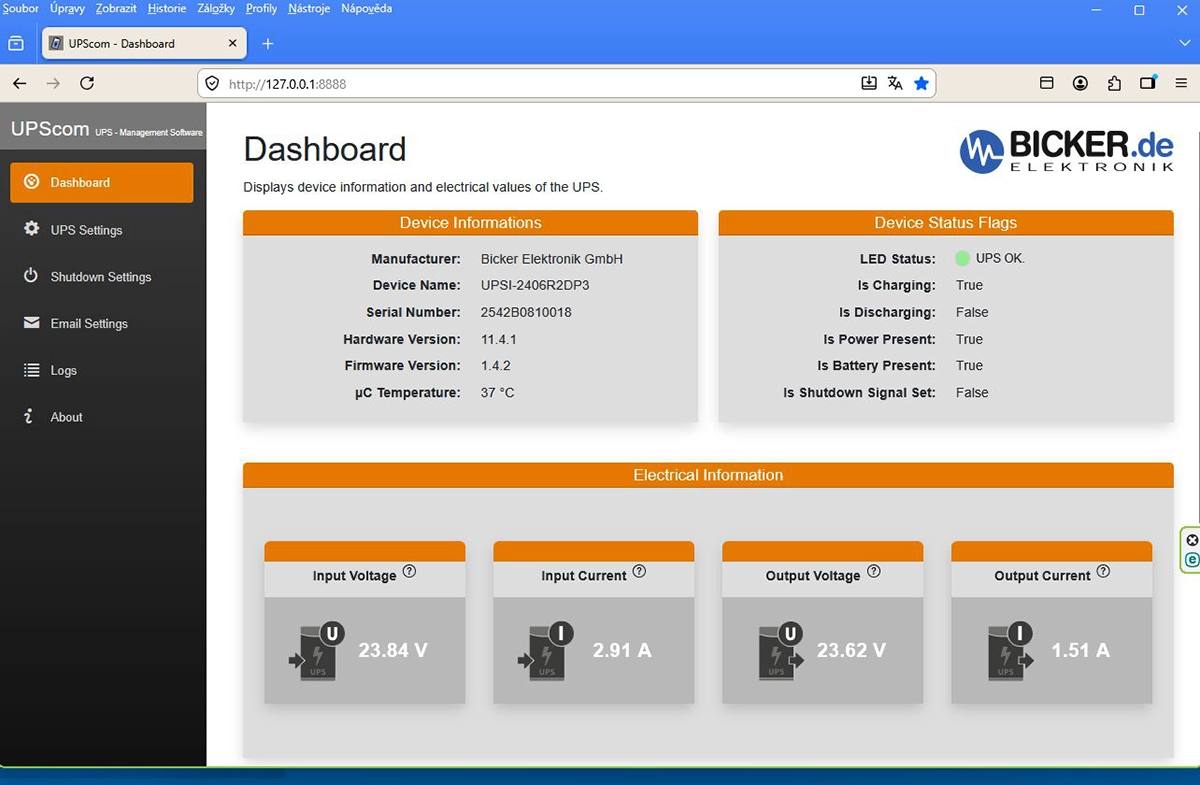
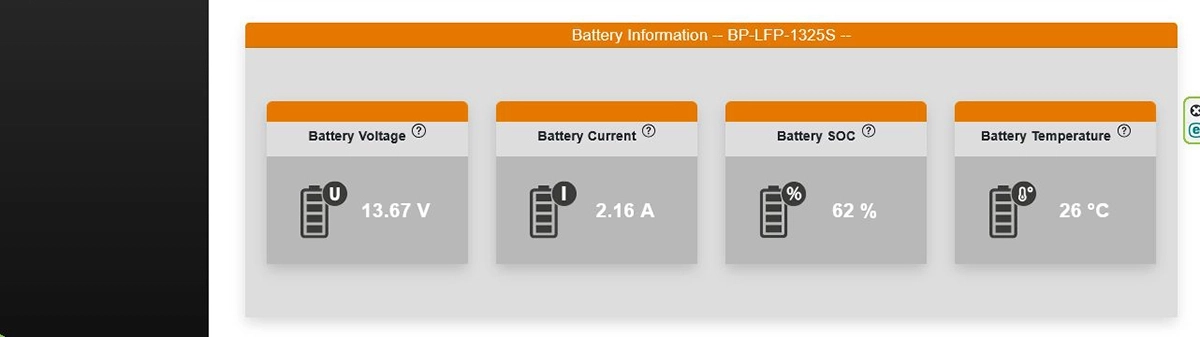
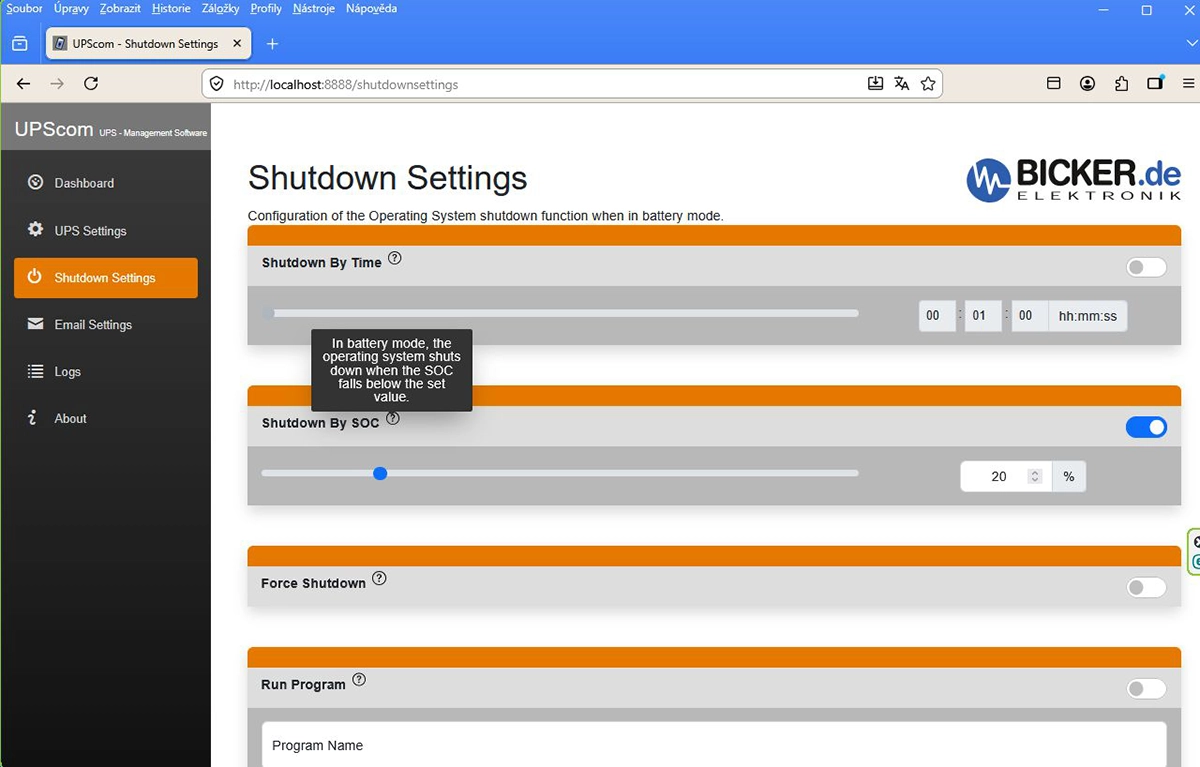
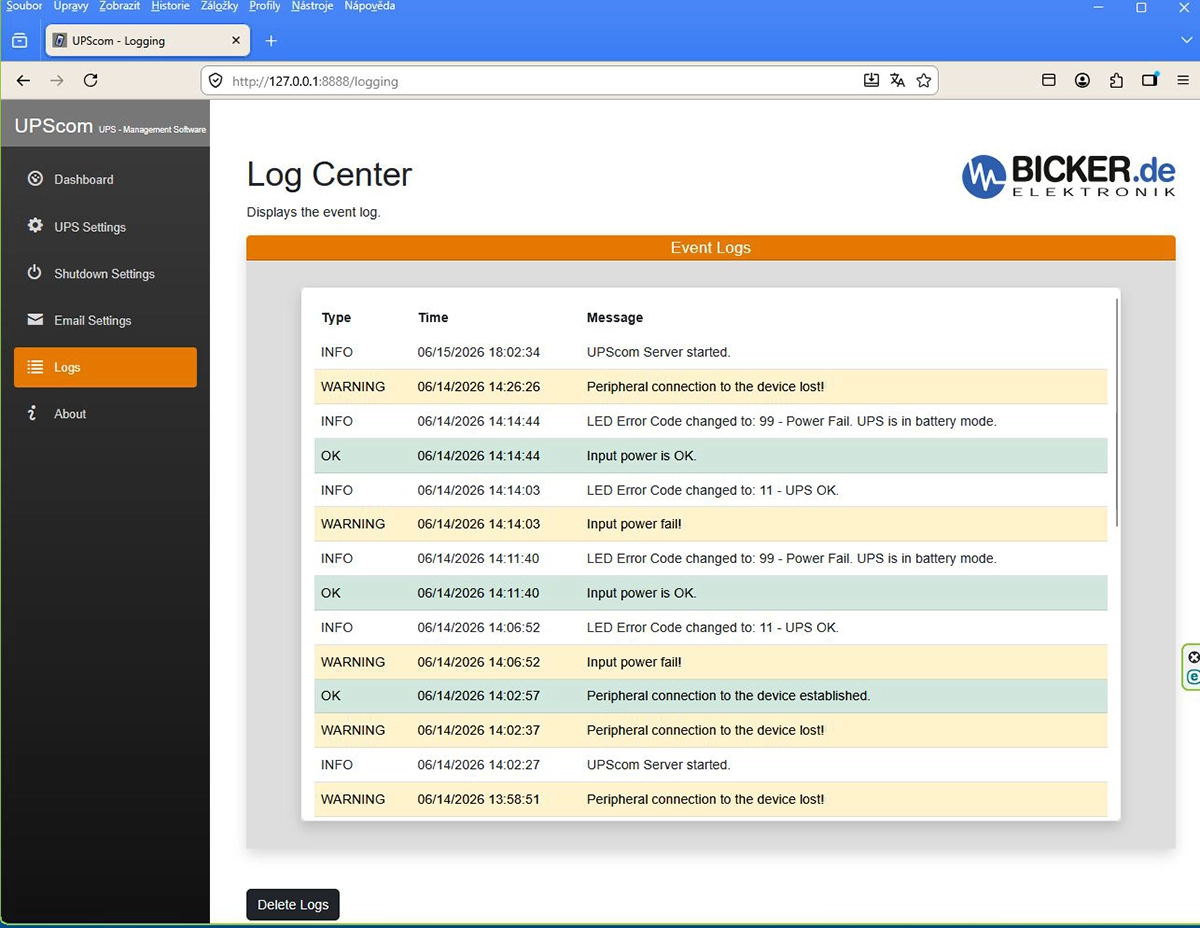
The main feature, however, lies in the UPScom software, which you can find in the downloads section for individual products on our e-shop. It communicates with the UPS, allows you to configure key parameters, and can even control the PC it runs on. It does not require installation—and we will see why shortly. You simply extract the files into a folder anywhere on your PC. There is also a second software option, UPS Gen2, which offers slightly different functionality that we will cover in the next part. You can also find this in the download section for the respective Bicker products.
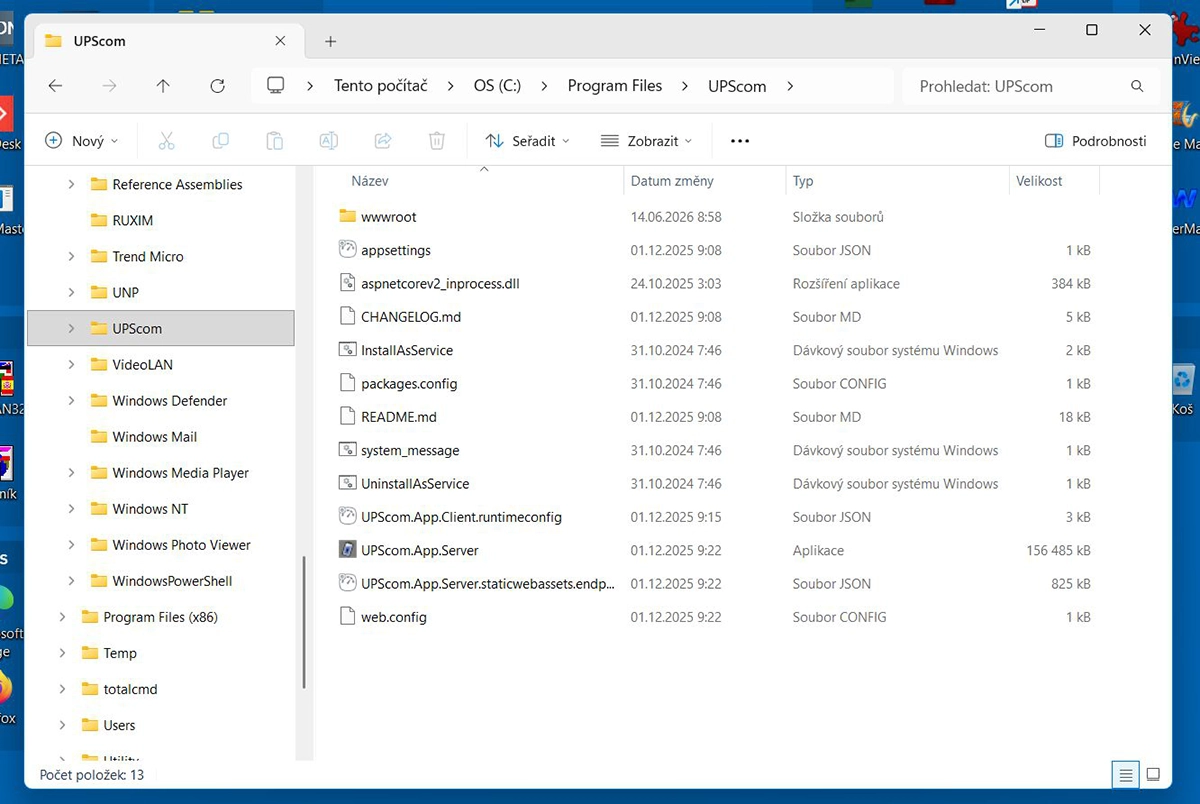
Here is how it's done: open the folder and run the 'InstallAsService' batch file as an administrator.
We can easily access the UPS data from a web browser by entering one of the listed addresses.
To access the user interface, open your web browser and enter -> 127.0.0.1:8888 or localhost:8888


Recommended products11

144 W 24 VDC / 6 A UPS backup power supply Bicker with supercapacitor and USB-C + RS485 Modbus interfaces
317,02 EUR Incl. VAT

144 W 24 VDC / 6 A Bicker UPS backup power supply with LiFePO4 battery and USB-C + RS485 Modbus interfaces
394,46 EUR Incl. VAT

360 W 24 VDC / 15 A UPS backup power supply Bicker with supercapacitor and USB-C + RS485 Modbus interfaces
571,12 EUR Incl. VAT

360 W 24 VDC / 15 A UPS backup power supply Bicker with LiFePO4 battery and USB-C + RS485 Modbus interfaces
716,32 EUR Incl. VAT

60 W 12 VDC / 5 A Bicker UPS backup power supply, supercapacitor
312,18 EUR Incl. VAT

96 W 12 VDC / 8 A Bicker UPS backup power supply, supercapacitor
291,61 EUR Incl. VAT

240 W 24 VDC / 10 A Bicker UPS backup power supply, supercapacitor
626,78 EUR Incl. VAT
96 W 24 VDC / 4 A Bicker UPS backup power supply, supercapacitor
307,34 EUR Incl. VAT

96 W 12 VDC / 8 A UPS backup power supply Bicker, LiFePO4 battery
387,20 EUR Incl. VAT
240 W 24 VDC / 10 A UPS backup power supply Bicker, LiFePO4 battery
771,98 EUR Incl. VAT
144 W 24 VDC / 6 A UPS backup power supply Bicker, LiFePO4 battery
398,09 EUR Incl. VAT